Entry · Ref N4EQYJYH
Dunnellon Homes and Gutter Style: Balancing Appearance, Drainage, and Maintenance
- Posted
- 2026-10-18
- Last amended
- 2026-10-18
- Account
- @runoffjournal179
A good gutter system on a Dunnellon home has to do more than look tidy from the street. It has to manage heavy summer rain, hold up through humid months, and move water where it belongs instead of dumping it against the house or washing out the landscaping. That balance between appearance, drainage, and maintenance is where most real decisions get made.
Plenty of homeowners start with color or profile because those choices are visible every day. Then the first hard storm hits, water pours off one roof section too fast, a corner bed turns into a trench, or a splash lands right where people walk in and out. At that point, style stops being just style. It becomes part of how the house works.
In this part of Florida, that matters. Summer thunderstorms, tropical systems, and long stretches of humidity put steady pressure on roof drainage. Gutters and downspouts are not just decorative trim. They are part of the home’s water management system, and they need to send runoff away from the foundation and into areas that can absorb it, such as turf or planted beds, instead of letting it collect near the structure.
The best-looking gutter is the one that disappears and does its job
When people talk about gutter style, they usually mean shape, size, and color. Fair enough. Those choices affect curb appeal. But on most Florida homes, the system looks best when it fits the architecture and quietly handles water without drawing attention to itself.
On a simple ranch, a clean gutter line that follows the fascia usually feels right. On a more detailed home with varying roof sections, the visual challenge is keeping all those runs and downspouts from looking patched together. A beautiful house can look oddly unfinished when the gutter color clashes with the trim or when downspouts cut across obvious focal points.
That is why conversations about gutter colors for Florida homes are not shallow at all. Color affects heat, glare, and how much dust or mildew shows over time, but most homeowners are really trying to solve a visual problem: how to make a practical system blend into stucco, siding, soffits, and trim. In my experience, the safest choice is usually to match either the fascia or the dominant trim color so the gutter line reads as part of the house rather than an add-on. If a home has dark bronze framing, screened enclosures, or a darker roof edge, a darker gutter can look more intentional than bright white.
Still, appearance should not overrule function. A color that looks perfect on a sample can become less appealing if it highlights overflow stains or if the downspout placement feels forced because drainage was an afterthought.
In Florida, drainage decisions matter more than most people expect
The strongest argument for gutters in this region is not cosmetic. It is runoff control.
Florida-friendly landscaping guidance emphasizes keeping roof runoff on site when possible, sending downspouts into lawns, planting beds, rain gardens, rain barrels, cisterns, or other pervious areas that absorb water. That principle is especially useful in sandy Florida soils, where stormwater can move fast across the surface before soaking in. If water is allowed to pour straight off the roof edge in the wrong place, it can erode soil, splash mud onto walls, and create repetitive wet spots.
It is also important to keep water away from the base of the home. Runoff that pools near the foundation can create moisture problems and pest issues. A gutter system only solves half the problem if the downspouts empty right beside the house. The water still needs a destination.
This is where many homeowners discover that “gutter style” includes layout. One house may need a straightforward run with a downspout into a lawn area. Another may need special attention because a front walk, driveway edge, planting bed, or screen enclosure limits the obvious discharge points. The house decides the solution more than the catalog does.
Pool areas change the drainage conversation
Homes with screened pool enclosures and outdoor living areas bring their own complications. When homeowners ask about gutter drainage for pool cages, they are usually dealing with a practical annoyance first and an appearance issue second. Water spilling in the wrong place can leave muddy tracks near a lanai, wash out decorative beds, or create messy overflows around spaces that are meant to stay clean and usable.
Pool-adjacent drainage calls for a bit more thought because nobody wants a downspout dumping water where people walk barefoot or where furniture sits after a storm. Roof runoff and surrounding landscape drainage need to be managed carefully so water does not erode soil or create a soggy transition between the house and the pool enclosure.
On these homes, the best result is often the one that keeps the outdoor area feeling dry and intentional, even after a downpour. That might mean directing water toward turf or planted sections away from traffic areas, rather than simply taking the shortest route down.
Matching the gutter plan to the roof matters
Not every roof sheds water the same way. Even without getting lost in product talk, homeowners quickly notice that one roofline may throw more water at a gutter than another. Valleys, long runs, and transitions around porches or screened spaces can all change how water arrives and how fast it moves.
That is why style choices should always be checked against actual drainage patterns. A slim, understated gutter can look great on a calm day. If it cannot handle runoff where two roof sections meet, looks stop mattering the first time it overflows.
The same kind of judgment applies when people search for gutters for metal roofs Florida. The search itself tells you the concern: roof material and water behavior affect the overall plan. Even if a homeowner begins by asking for a certain look, the right answer still starts with where the water goes, how fast it gets there, and where the downspouts can discharge safely.
Four questions worth answering before choosing a style
- Where will each downspout send water, and will that area absorb it well?
- Which sides of the house are most visible from the street or outdoor living spaces?
- Are there pool cages, walkways, or beds that make overflow especially messy?
- Will the color and placement still look good once the system has a season of Florida dust, algae, and leaf litter on it?
Those four questions catch most of the mistakes I see. They force the design conversation to stay honest. If a proposed system looks elegant on paper but sends runoff beside the foundation, it is not a good system. If it drains beautifully but leaves awkward downspouts across the front elevation, it probably needs another pass.
The maintenance side always shows up eventually
No matter how clean the installation looks on day one, Florida weather will test it. Humidity, leaf litter, and regular storms mean gutters and downspouts need maintenance. That is not a scare tactic. It is simply normal home upkeep.

UF/IFAS guidance notes that gutters and downspouts require maintenance because debris can contribute to drainage problems. That tracks with what homeowners see in real life. A small buildup at a bend or outlet can turn a well-planned system into one that overflows at the worst moment. Sometimes the first clue is subtle, a dark streak, a wet mulch bed, or water dripping long after the storm has passed. Other times it is dramatic and impossible to miss.
This is where people often fall into two opposite habits. One group assumes gutters are “set it and forget it.” The other becomes so frustrated with debris that they decide gutters are not worth having at all. Both views miss the point. Gutters are useful, but they work best when they are treated as an active part of the house, not an ornament.
Search terms like gutter cleaning Dunnellon FL keep showing up for a reason. Local homeowners are dealing with the same cycle year after year: debris builds up, rain exposes the weak point, and maintenance suddenly jumps to the top of the list.
DIY gutter cleaning or hire a pro?
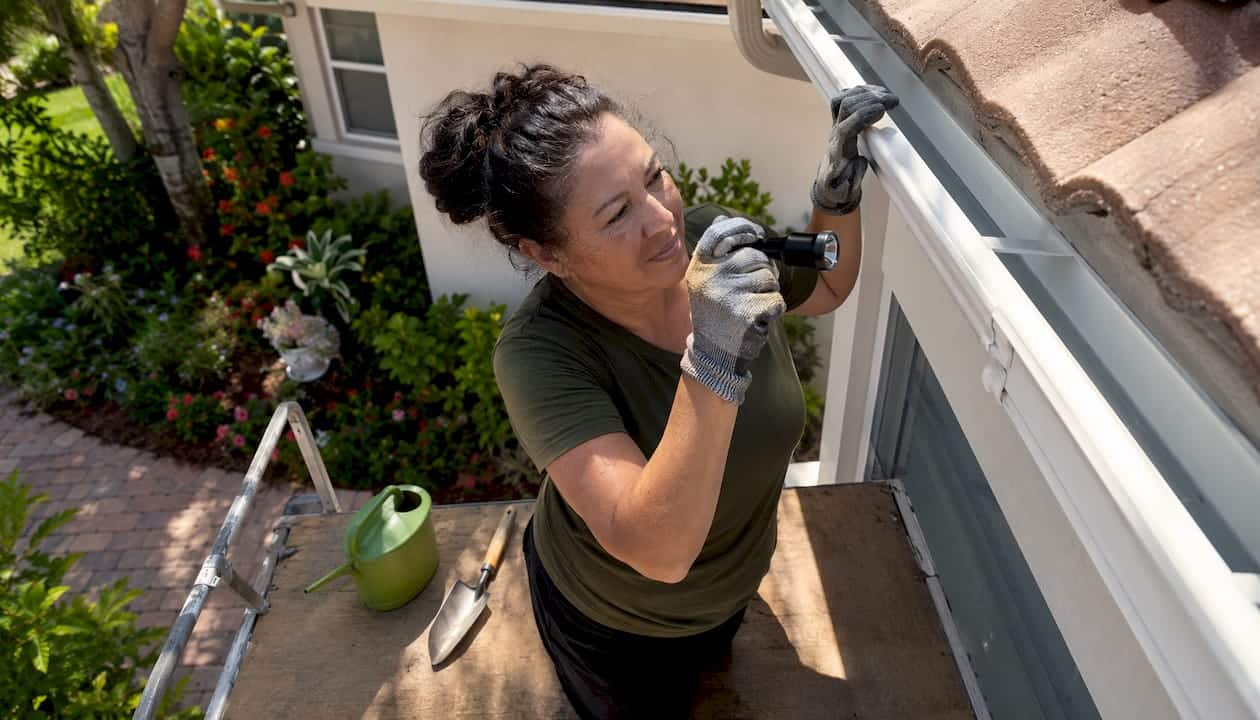
This question comes up constantly, and it should. DIY gutter cleaning or hire a pro is not just a budget question. It is also about access, comfort with ladder work, and whether the homeowner can actually spot drainage https://runoffguide074.evercolumn.com/posts/how-gutter-guards-handle-oak-leaves-and-acorns-in-reddick issues while cleaning.
Some people are perfectly capable of cleaning a reachable, straightforward run and checking whether the downspouts are moving water properly. Others are dealing with second-story sections, awkward rooflines, or pool enclosures that make access less forgiving. In those situations, the real risk is not only falling. It is missing a developing problem because the work became a quick debris scoop instead of a careful inspection.
A proper look at the system should include more than removing leaves. It should also ask whether water is being directed away from the home and into areas that absorb it, whether any corner shows signs of overflow, and whether runoff is damaging beds or creating muddy patches. If the answer is no one is really checking those things, hiring help starts to make more sense.
That same judgment applies whether someone is searching for gutter guards Mount Dora FL, gutter repair Hawthorne FL, or routine service closer to Dunnellon. The underlying issue is not the town name in the search. It is whether the system is still draining as intended and whether the home owner has a reliable way to keep it that way.
Gutter myths Florida homeowners should stop repeating
Florida homes seem to attract a few persistent gutter myths. One is that if a house has large roof overhangs, gutters are optional everywhere. Another is that if the yard is sandy, water will always soak in before it causes trouble. A third is that any place away from the front porch is an acceptable downspout outlet.
Real drainage does not work that neatly. Water tends to find vulnerable spots, especially during hard storms. It can wash out mulch, carve channels through a bed, or sit near the base of the home if the discharge point is poorly chosen. Sandy soils can absorb water, but fast-moving runoff can still create erosion before it soaks in. And a hidden side yard can become a problem area just as easily as a visible front corner.
Another common misconception is that appearance and performance have to fight each other. Usually they do not. A thoughtfully placed system often improves the look of the house because it prevents stains, protects planting beds, and keeps outdoor spaces cleaner. The prettiest roof edge is not the one with no gutter. It is the one that still looks cared for after several Florida storm cycles.
What homeowners often miss about appearance reviews and HOAs
Exterior changes can run into neighborhood review standards, particularly in communities with architectural review committees or homeowners associations. Florida law gives associations authority over exterior appearance standards, including color and style specifications for certain exterior products, while also requiring those standards to comply with the building code and not be used to deny conforming installations.
For homeowners, that means two practical things. First, color and style approvals may matter more than expected, especially if the house is in a neighborhood where trim colors, exterior accessories, or visible drainage components are reviewed. Second, it is wise to think through the appearance side early, not after the drainage plan is finalized.
That does not mean the association should dictate bad water management. It means the homeowner should be ready with a solution that handles runoff properly and fits the community’s visual standards. Often that is easier when the gutter color ties cleanly into the house and the downspout routing looks intentional rather than improvised.
Why maintenance-friendly design is worth more than flashy add-ons
Many product conversations drift quickly toward accessories. Guards, screens, specialty profiles, and upgraded finishes all sound appealing, and some may be helpful in the right setting. But a maintenance-friendly design starts with simpler basics: clear water path, sensible downspout placement, and discharge into absorbent areas rather than problem spots.
A house with a clean layout and accessible maintenance points is often better off than a house loaded with add-ons but poorly planned drainage. Debris still happens. Storms still happen. Water still needs somewhere to go.
That is also why terms like seamless gutters Williston FL or gutter guards Mount Dora FL should be treated as starting points, not automatic answers. Seamless construction may appeal to homeowners who want a cleaner look. Guards may appeal to homeowners tired of repeated debris cleanup. Both can be part of the conversation, but neither replaces the need for proper runoff control and routine observation.
A year-round gutter checklist Florida homeowners can actually use
- Before the heavy summer rain pattern sets in, check that downspouts send water away from the house and into lawn or planted areas that can absorb it.
- After major storms, look for fresh erosion, mulch displacement, splash marks, or water collecting near the foundation.
- Keep an eye on pool-adjacent and walkway-adjacent areas, where messy overflow shows up fastest and causes the most irritation.
- Clear debris or schedule service when buildup starts affecting flow, rather than waiting for a full overflow event.
- Recheck appearance and function together, because stains, sagging, and repeated washout are signs that the system needs attention.
That is the sort of year-round gutter checklist Florida homeowners can actually stick with. It is not fussy. It simply follows the weather and focuses on what the house is telling you.
When repair beats replacement, and when it does not
Homeowners often jump straight to replacement because it feels decisive. Sometimes repair is enough. If the system generally works but one section is overflowing, one downspout is poorly aimed, or one corner keeps washing out a bed, a targeted fix may solve the issue. In those cases, the visible symptom is local and the overall drainage concept is still sound.
Other times, the problem is more fundamental. If runoff has never been directed away from the house properly, if the current layout sends water toward hard surfaces and back toward the structure, or if repeated maintenance has not prevented the same trouble spots, then a broader redesign may be the smarter move.
This is the same judgment behind service searches from different towns, whether it is gutter repair Hawthorne FL, gutter cleaning Dunnellon FL, or a request for a fresh installation elsewhere. The town changes. The homeowner’s real question does not. Is the current system doing its job, and if not, is the failure isolated or built into the design?
The houses that age best usually get this balance right
The Florida homes that continue to look sharp over time usually share one trait: their owners did not treat gutters as a minor add-on. They treated them as part of the whole exterior, right alongside the roofline, the landscaping, the walkways, and the outdoor living areas.
That mindset tends to produce better choices. Colors are chosen to blend rather than shout. Downspouts are routed with the yard in mind. Water is sent into places that can absorb it instead of against the foundation. Pool areas stay cleaner. Planting beds hold their shape. Maintenance is expected and scheduled, not postponed until stains and overflow make the problem obvious.
If you are weighing style options for a Dunnellon home, start there. Let appearance matter, because it does. But let drainage lead, because Florida weather will always test the system harder than a sample board or a showroom photo ever will. When those two priorities work together, the house looks better and behaves better, which is the whole point.